

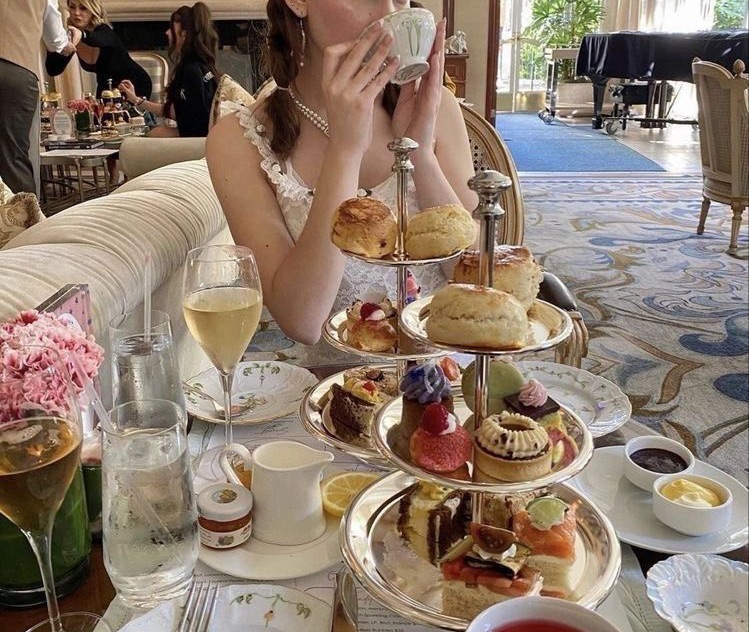
Yesterday, I stumbled upon a heartfelt confession from a 25-year-old woman,who started to lead a delusional life by pretending to be wealthy on social media. She talks about how she compared herself to her rich friends and driven by the desire to replicate their lifestyle took on multiple jobs to increase her income. She did make some money, but it wasn’t enough to compete with the glamorous lifestyle that her friends had. Thus, she fell into the trap of social media deception. She doesn’t own an iPhone but has Instagram stories of her upgrading her iPhone to the latest version. Her visits to malls became photo opportunities, she tried on expensive clothes, clicked pictures and returned. She goes to cafes, clicks pictures in aesthetic backdrops and disappears without ordering anything. The worst part is that she even screenshotted the stories of others and used them on her feed to pretend that she was travelling to other countries for her vacation. She poignantly concluded, “I’ve lost my happiness because I fear being exposed and I’m more stressed than ever before. I’ve lost some of my good friends because they no longer trust me. I wish I never downloaded Instagram.”
This made me remember an interesting scholarly article that I read sometime about Online Impression Management and some people I know who suffer from this issue. “Impression Management” refers to the process by which individuals control or manipulate the perceptions others have of them. In the context of social media, this involves curating and presenting a particular image or lifestyle to create a specific impression. The need to maintain such an impression is often driven by the desire for social validation. The saddest part is that such continuous efforts to present an idealized version of oneself often result in Social Media Fatigue.
When a person aims to create a favourable impression online he spends significant energy on the process of choosing the photos to be shared on social media. This might sound like a simple task, but think of a time when you had to choose among a hundred pictures in your gallery for posting on social media, you’ll examine each photo, zoom in and out and ensure that the pose, angle, lighting, and background are perfect. The struggle doesn’t end there, there might be objects in the frame that have to be erased, and some pictures might require a lot of editing. The next part is, deciding the order in which the photos have to be posted, and creating suitable captions. This whole process can sometimes last for hours! Though we do not always recognize it, this process can be emotionally draining, leading to increased stress and anxiety aka social media fatigue.
Seeking validation from others is an innate human desire. The image-focused person is keen on gaining positive feedback and acceptance from their social groups. Therefore, when selecting photos such an individual will often experience pressure to conform to societal standards. The fear of being judged or criticised by those whom we want acceptance could also be a strong motivator. I had a classmate who would ask us at least ten “will-this pic” questions before posting a photo on Instagram, which highlights the depth of this internal struggle. Impression management by conforming to societal standards itself is draining, but on social media, a person has to face an additional challenge, that is, to conform to the platform’s standards of beauty and success to be considered desirable. There is no doubt that the unrealistic beauty standards of social media are a major cause of body image issues and low self-confidence among youngsters. Sadly, online impression management includes deliberately overlooking this harsh reality. The paradoxical endeavour to fit in with these standards and stand out from the crowd can be an emotionally taxing experience.
Impression management can also lead to continuous comparison with others on social media, who may also be absorbed in online impression management. My classmate whom I mentioned earlier, on one occasion happily posted photos of her weekend getaway to a picturesque location. However, her happiness was short-lived when she scrolled through her phone to see the luxurious vacations and extravagant experiences of her friends. The photos fueled a sense of competition and as a result, she felt an unconscious urge to one-up or at least keep pace. The sad truth is that the comparison only made her feel that her vacation wasn’t good enough and it even impacted her self-esteem.
And what about the stress from the struggles in maintaining a mask of perfection? Constantly managing impressions can result in a sense of inauthenticity, because an online persona presents an idealized version of fascinating outings, flawless selfies, and picture-perfect moments and conceals the authentic, less glamorous aspects of life. Gradually, the dissonance between the online persona and the reality may disconnect the individual from their true self, they may feel estranged from their thoughts, emotions and core values, contributing to emotional fatigue. This is what happened to the woman whom I mentioned in the introduction, she became exhausted by the constant pressure to live up to the fabricated image, experienced the fear of being exposed, and had to deal with an “identity crisis,” which finally resulted in a sense of emptiness and unhappiness.
Moreover, this struggle with authenticity can hinder meaningful relationships, as people can easily distinguish the difference between real and fake. Would you become close with your introverted classmate who hates to participate in social events but portrays himself online as someone outgoing, adventurous and constantly engaged in social activities? Would you befriend a financially struggling individual who presents himself as someone leading a lavish life on social media? You might find the authenticity gap challenging to bridge. I wasn’t surprised when the woman whom I referred to in the introduction admitted that she lost her friends. When you pretend to be someone you’re not, it will only lead to a breakdown of trust and cause a strain on relationships.
While we try to create a positive impression on social media, it is equally important to recognise the potential pitfalls of online impression management. To cultivate a healthy digital presence, one should constantly try to strike a balance between portraying one’s best self and embracing authenticity.
Melanie Ann George🌼
 Melanie Ann
Very nice informative post. My regards to you.👏 Enjoy your life. I always take a pictures for my pleasure and all is okay.
LikeLiked by 1 person
Thanks a lot for your comment. Personally, I don’t share my photos online to maintain my privacy. It’s great that you’re able to capture moments that bring you joy!
LikeLiked by 1 person