
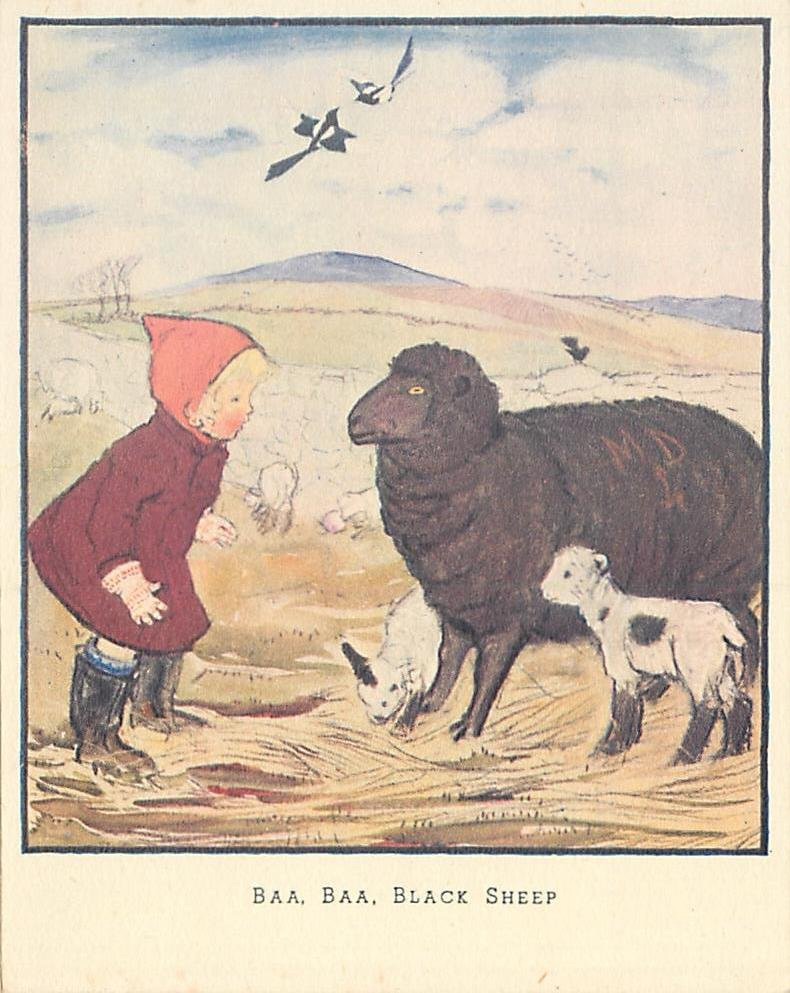
What does ‘Baa Baa Black Sheep’ mean to you? For me, it is a glimpse of a bygone childhood era where the changing colour of the sky, dewdrops on the leaves, or dragonflies that could lift tiny pebbles filled me with immense wonder. I still remember my old English textbook that had a lovely picture of a boy and a few sheep on a lush green farm. ‘Baa Baa Black Sheep’ has to be one among the first few nursery rhymes that most of us learnt in kindergarten and is able to recollect even after years. Many assume that this is just a rhyme that helps children in language acquisition, or in developing auditory skills to distinguish between sounds or simply a rhythmic song that survived generations. But history tells a different story, and it is not as delightful as the rhyme sounds.
While studying in college, I heard an intriguing but unsupported claim disguised as a modern reinterpretation of ‘Baa Baa Black Sheep.’ The revisionist theory was that ‘Baa Baa Black Sheep’ is inherently racist because it alludes to slavery. The presence of the terms ‘black’ and ‘master’ in the rhyme is primarily attributed to this misconception. Though many people dismissed the claims by arguing that the rhyme has nothing to do with race and is simply about sheep and wool, some people started to label it as “politically incorrect” and highlighted the significance of being sensitive in children’s resources. At some point, I even started to think if the phrase “black sheep” which represents a misfit or outcast originated from this racist allusion.
As part of writing this article, I made two of my constant companions sing the rhyme and to my surprise, both of them sang it like this:
Baa Baa Black Sheep, have you any wool?
Yes, sir, yes, sir, three bags full
One for my master, and one for the slave
And one for the little boy who lives down the lane.
Did you spot the error? If not, make an attempt to scrutinise the third line. Slave??? It was always ‘dame,’ never slave. But somehow both of them used the word slave. Next, I asked a bunch of my students to sing it, and most of them also made the very same mistake, only two or three remembered to use ‘dame’ correctly. Out of curiosity, I probed whether they would believe me if I said that the rhyme is related to slavery, and they nodded their heads in approval saying that the ‘wool’ in the rhyme is only collected from the black sheep, not the white sheep, thereby pointing to the exploitation of African slaves by white slave owners. Another set of students said that the terms ‘master’ and ‘slave’ reflect social hierarchy and power imbalance. The entire conversation made me realise the reason why many schools and nurseries were convinced that the rhyme is related to slavery. When you analyse the rhyme in a modern perspective, it does feel like it has connections to the discrimination experienced by blacks. And if the majority uses ‘slave’ instead of ‘dame,’ obviously! As this belief became widespread many schools replaced ‘black sheep’ with ‘happy/bright/pink/rainbow sheep’ and even omitted the word ‘master’ entirely from the rhyme.
However, is there any element of truth within these beliefs? There is no historical evidence to support the modern reinterpretation that ‘Baa Baa Black Sheep’ is related to slavery. There is no racial coding or hidden prejudice in the rhyme. This is a clear case of anachronistic interpretation, which refers to an interpretation that imposes modern ideas or concepts onto a past context where they did not exist or explaining something archaic through a modern lens. If I say that ancient Greek women were oppressed because they did not have careers or political rights, I am overlooking the fact that women’s social roles were tied to household management back then. Being a housewife was a respected duty within their worldview. Calling it ‘oppression’ in a modern feministic sense projects 21st-century expectations onto a 5th-century BCE society.
Now, why is this problematic? Take the case of the reinterpretation of ‘Baa Baa Black Sheep.’ It rewrote the history and twisted the facts behind this classical nursery rhyme. If the rhyme is not associated with slavery, what then is the true history behind it? As children we innocently sang ‘Baa Baa Black Sheep’ without being aware of the heartbreaking truth behind the rhyme. To understand the underlying meaning of the rhyme, we must go back to the year 1275 when King Edward I returned from the crusades. Wars had emptied the royal coffers and England was drowning in crippling debt. In ‘an era when trade in wool had been the backbone and driving force in the English medieval economy’ Edward’s advisor came up with a promising idea involving the millions of sheep in the countryside of medieval England. Hence, came a law called ‘The Great Custom’ or a ‘Wool Tax.’ It was a permanent system of duties on international trade, specifically on the export of wool, and the money generated was used to fund the royal activities.
When we examine the verses of ‘Baa Baa Black Sheep’ we get a clear understanding of how the farmers were exploited under the law. The ‘three bags’ in the song symbolise how the profits or taxes were divided. ‘One for the master’ refers to the King who imposed the wool tax getting one third of the wool. King Edward I used the revenue to fund his military endeavours and state expenses. ‘One for the dame’ represents the church and the revenue was used to fund the operations of the ecclesiastical structure, clergy support and to finance monumental constructions. Lastly, ‘one for the little boy’ alludes to the farmer or shepherd who was as helpless as a little boy. It showcases how unfair the taxation was, the shepherdwho underwent struggles to raise the sheep had a low social status and received the smallest share if they were fortunate. It is interesting to note that the last line was originally “none for the little boy who cries down the lane.” Yes, the farmer’s share was purely residual, in some cases they ended up with nothing after the combined heavy taxes for the King and mandatory tithes for the church were paid.
By 1290, it is estimated that there were about 5 million sheep in England, producing approximately 30,000 woolsacks annually. Just a century later, during the reign of Henry V, nearly 63% of the Crown’s total income was derived from the wool tax. Wool became the cornerstone of the nation’s wealth and was described as “the jewel in the realm.”
The next significant question is, why does the rhyme portray a black sheep instead of a white one? Some claim that, black sheep had an undeniable significance in medieval England and were highly in demand due to their rarity. If the black wool was indeed a premium product, the rhyme showcases the profound injustice experienced by the shepherds who possessed black sheep; they had high-value products, but the exceptionally heavy tax burden left them with no profits. Again, there is no historical evidence to back up this belief because black wool could be woven into cloths without the use of expensive dyes, making it more affordable. In my opinion, ‘black sheep’ may be purely used for alliteration, try replacing it with white sheep and the rhyme loses its rhythm. In fact, we should be more worried about the crucial transformation in the cultural memory surrounding the rhyme; the politically charged original lyric “none for the little boy who cries down the lane” shifted to the modern, innocuous version “one for the little boy who lives down the lane.” The transformation of the lyric demonstrates how the memory of a political grievance is often deliberately erased or softened in the process of transmitting folk culture across generations.
With the ‘wool tax’ fading into history and the emergence of anachronistic interpretation of ‘Baa Baa Black Sheep’ we often overlook the fact that the rhyme functioned as a profound political commentary and a socio-economic satire in medieval England. In an era where open criticism of the monarch or high-ranking church officials could lead to severe penalties or even death, nursery rhymes provided a recognized cultural space for circulating political grievances safely. If you made a public speech against the oppressive tax system, you could be punished, but nobody cared to question the contents of a seemingly frivolous children’s rhyme.
Next time you hear a child singing ‘Baa Baa Black Sheep,’ please remember that it was a song of protest disguised as an innocent nursery rhyme that survived generations, and singing it was a rebellion against the tyrannical authorities. And the key takeaway? Before rushing to form a judgement on a text, do some research on the historical, cultural, social and literary context. Don’t blindly believe Roland Barthes. Context matters.
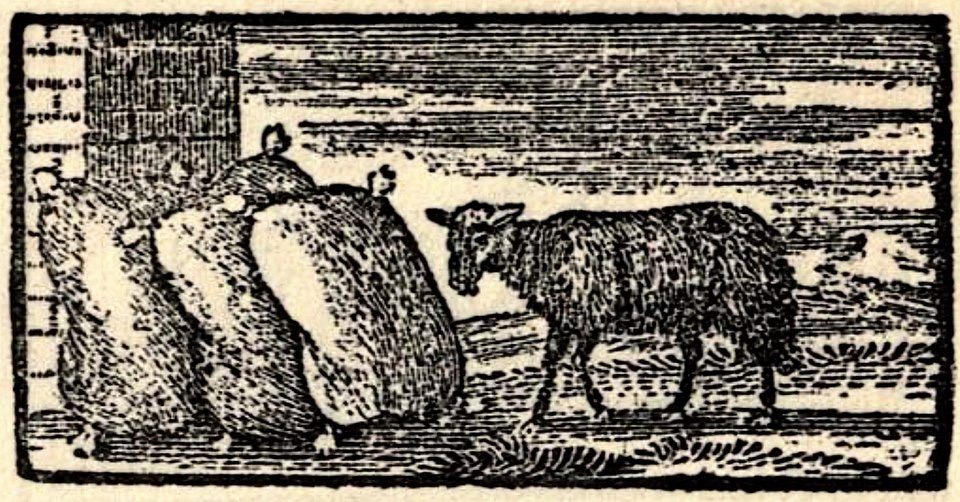
Illustration for the rhyme from Mother Goose’s Melody, first published in 1765
 Melanie Ann
Thank you for this. I always remembered it as dame, but never knew the significance of it in terms of wool tax. Makes so much sense.
LikeLiked by 1 person
Thank you for the comment! Once we look at it from the wool-tax angle, the whole rhyme suddenly clicks.
LikeLiked by 1 person
Yeah, it does. To be honest I never paid attention to that song much, so I never even knew people had tried to change the meaning.
LikeLiked by 1 person
It’s incredible how a simple rhyme encodes such a sharp social commentary.
LikeLiked by 1 person
I have never thought a lot about baa baa black sheep and both the modern anachronistic interpretation and original historical context from 1290 were new to me. There is a lot of danger with modern popular anachronistic interpretations and knowing the real history is important. It was a great analysis.
LikeLiked by 1 person
Thank you so much. You’re right, digging into the actual historical context often reveals a completely different story. But many instinctively view the past through today’s assumptions, which is why anachronistic interpretations become so popular.
LikeLiked by 1 person
Yes that is something important to keep in mind
LikeLike