
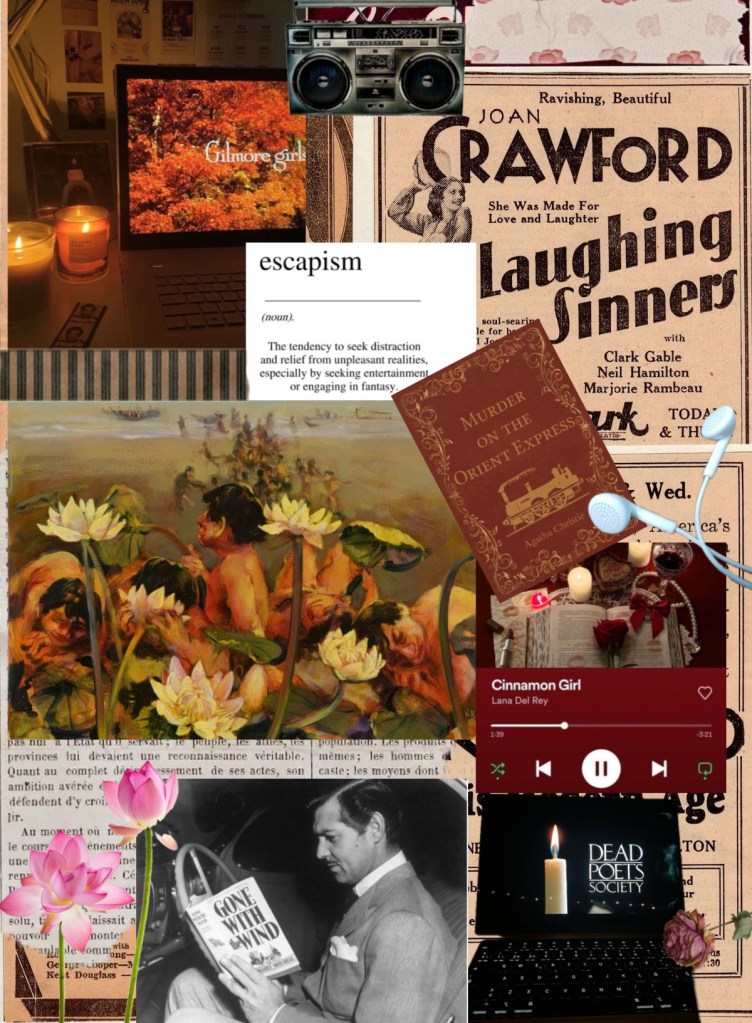
If you are unfamiliar with Homer’s Odyssey, here’s a little Greek Mythology for you. After the gruelling siege of Troy, Odysseus and his men set out on their long-awaited journey with a singular goal: return to their beloved homeland, Ithaca. With hearts that were maps that led to the arms of their kin, the men sailed for several days until they arrived at an unknown island inhabited by the Lotus Eaters. A beautiful and dreamy island, the perfect break they all needed. The welcoming natives offered them lotos, “sweet as honey” to eat. The following lines from Alfred, Lord Tennyson’s poem ‘The Lotos-Eaters’ will explain the impact of consuming lotus on the men who traversed the “wine-dark sea” just to touch the soil of their home.
They sat them down upon the yellow sand,
Between the sun and moon upon the shore;
And sweet it was to dream of Fatherland,
Of child, and wife, and slave; but evermore
Most weary seem’d the sea, weary the oar,
Weary the wandering fields of barren foam.
Then some one said, “We will return no more”;
And all at once they sang, “Our island home
Is far beyond the wave; we will no longer roam.”
The men who were driven by the fire of longing to reunite with their families suddenly lost their desire to return home. What profound reason anchored their spirits to the island they wanted to leave behind? What made the journey ahead seem hollow? So, here’s the twist: The lotus plant they received had a narcotic effect, causing those who eat it to forget their homeland and loved ones. They became apathetic and their only desire became remaining on the island ‘chillaxing’ with the other Lotus-Eaters. Yes, the men gradually forgot their ultimate goal under the charm of the lotus they consumed. They were trapped by contentment.
The tale of the Lotus Eaters symbolizes humanity’s desire to escape reality and avoid responsibilities. We even have a word for it, “escapism.” The Oxford English Dictionary defined escapism as “The tendency to seek, or the practice of seeking, distraction from what normally has to be endured.” It is a recurring aspect of human behaviour, evident in literature, art, and modern entertainment. It reveals a deep tension between freedom and obligation.
The history of the word “escapism” is quite fascinating. The concept of “escapism” was born in the 1930s. What was the pivotal event that took place during that time period? The Great Depression. Owing to the unemployment during the depression, people had more free time and a deep longing to escape the bleakness of economy, the alarming rates of unemployment and resulting hardship. Readers sought refuge in what is now known as escapist literature, which refers to a work of fiction that immerses the reader into a fictional world different from their own (examples:detective thrillers, romance, fantasy, and science fiction). It is a striking historical irony that during the height of the economic collapse, the literature published between 1929-1941 entirely avoided referring to the grim realities of the Great Depression. Maybe, delulu was their only solulu.
Alan Brinkley’s“Culture and Politics in the Great Depression” expounds how the pillars of American culture, magazines, novels, radio and cinema promoted escapism rather than functioning as mirrors of society. For instance, the pages Life Magazine, a popular magazine in the ‘30s was filled with pictures of athletes, luxury ship launchings, and bathing beauties. By focusing on construction projects and leisure rather than unemployment, the publication provided a visual narrative that suggested a world still in motion and untouched by decay. The best-selling books during that time such as Gone with the Wind, Lost Horizon and Anthony Adverse and other works all have one thing in common, they were escapist fiction. Radio followed a similar blueprint of digression; radio schedules were dominated by lighthearted variety shows, music, adventures and comedies. What about the popular movies of the ‘30s? The film industry consciously steered away from social realism. Hollywood primarily focused on producing comedies. Famous director Preston Struges suggested how “foolish and vain and self-indulgent” it would be to make a film about suffering. Leaders of the film industry believed that they acted like the unsung heroes by producing movies that made audiences happy, and happy people do not revolt or start revolutions.
Does resorting to escapism help you reach your goals? Does winking at problems make them disappear? Deep down we all know that creating a false sense of reality is not the solution to life’s problems. Odysseus’ men and people of ‘30s had developed one common effect when they became delusional; they fell into the trap of enjoying the present, avoiding responsibilities and forgetting about the future. Even the strongest-willed and determined ones among Odysseus’ men lost their identities and their desire to work hard to achieve their goal of reaching their homeland. In the 30’s by pretending everyone was doing okay, society failed to acknowledge the systemic injustices and racial inequalities that the Depression made even worse. When mass media focused on glamour, it completely ignored the plight of African Americans, farmers, factory workers and the homeless who suffered the most. Escapism delayed social change; when people are distracted by comedies or escapist fiction, they are less likely to demand reform or better working conditions. Also, when the media often painted a picture of a life of luxury and success that was practically impossible to achieve for the average person during the Depression, imagine the guilt experienced by people who were unemployed and struggling to make ends meet.
But are we any different from the lotus-eaters and escapist media consumers who turned a blind eye at the challenges ahead of them? The screen time statistics of 2025 indicate that people spend around 6-7 hours on their phones daily. How did we even reach here?
In the 1930s, if the Depression forced people to seek escapist entertainment, in our times, the COVID-19 pandemic, with lockdowns, social distancing, and prolonged time at home prompted a desire to escape our reality and led to increased screen time. When we relied on our phones for entertainment, information and social connection to cope with isolation, it escalated into problematic use (which we normalised) and gradually turned into smartphone addiction. Nearly five years after the outbreak, our short phone breaks now often turn into hours of scrolling. And every time we do this, it gives us a strange sense of comfort. But slowly, we lose sight of goals and duties, we end up procrastinating and later feel guilty for not showing self-control.We may not be consuming lotus with narcotic effects, but hours of doomscrolling, binge-watching, or binge-listening are undoubtedly a modern form of escapism.
Even though we are well aware that spending hours behind screens will only make us anxious after the process and that it will leave us with little sense of fulfilment, why do we keep returning to it? The answer is deceptively simple. The first reason is, people are becoming intolerant of boredom. We have started to think of boredom as a repulsive disease that should be avoided at all costs. But the truth is, we need to feel bored. Why is that? When constant stimulation from screens curbs creativity, we stop thinking and accomplishing things. But boredom, by contrast, forces you to doodle on the pages of your book, write down the beautiful thoughts wandering in your mind, create and test a new recipe, debate whether the exoplanet Kepler-22b is habitable, text an old friend, paint a picture, declutter your room, pick up your dusty and neglected guitar, spend some time in nature, observe the beauty of ordinary things, oh the list can go on. Boredom is not our enemy, in fact, we need boredom to be productive and creative. For that to happen, we need to stop reaching for our phones the moment we feel bored. The philosopher Bertrand Russell claimed that the ability to endure boredom is‘essential to a happy life.’ Rather than trying to escape boredom, learn to embrace it. We need to remind ourselves that the happiness earned through effort always outlives the comfort borrowed from escapism. Focus on the bigger picture.
The second reason is more concerning; we are developing an aversion to difficult tasks. Meeting a deadline is hard, working on a nerve-racking project is hard, learning a new language is hard, studying for an exam is hard, researching on the significance of anthropology in the 21st century is hard, preparing a meal is hard, and exercising is hard. But why do these tasks feel overwhelming? Largely because we trained our brains to seek refuge in screens. For instance, if you ignore an undesirable task and resort to a movie marathon or listen to your spotify playlist for hours, you might experience short-term pleasure due to the release of dopamine, the “happy chemical.” To be transported to another era, to be a part of a life you never lived, to experience someone else’s happiness or mourn a loss, all of these feelings are indescribably beautiful. But the constant release of dopamine makes binge-watching or binge-listening highly addictive, similar to the mechanisms in gambling. Would you deliberately choose to be a gambler?Most of us would say no, but many of us havetrained our dopamine-seeking brains to expect constant, quick bursts of satisfactionthrough doomscrolling or bing-watching,making it harder to concentrate on deeper, more complex tasks. You taught your brain that real-world tasks are less stimulating and engaging. But, at the end of the day, no amount of screentime can ever compete with the quiet pride and true happiness of accomplishing the so-called hard tasks. Escapism feels easy now; achievements feel good forever.
We already discussed how people in the ‘30s developed an unrealistic view the towards the Great Depression through escapism and how it delayed collective action and postponed social change. We are no different from them if we allow our love for escapism to ignore the issues that need our attention. Complacency, the a feeling of being satisfied with how things are and not wanting to try to make them better, is in the words of my favourite uncle “a vicious villain that makes us lethargic and inactive.” When you become complacent in your job, you stop upskilling. You would rather waste your time watching unrealistic romantic dramas or anime, than work hard to get a promotion. When you become complacent with that degree you earned, you stop learning further. In matters of health, complacency becomes an excuse to abandon your diet, to mindlessly consume ultra-processed food. When complacency takes hold in your relationship, you stop making genuine efforts to make your partner feel valued. Doomscrolling and binge-watching foster complacency, it gives you a false sense of satisfaction and you overlook the things that truly matter. Moreover, it kills ambition and prevents growth. How can you know what greatness you are capable of unless you test your limits?
In the myth of the lotus-eaters, Odysseus who understood the danger of false contentment dragged the affected men back to the ship despite their resistance. He even tied them under the rowing benches so they could not escape. But no Odysseus is going to drag us out of brainrot. Somebody once said, “the only person between who you are and who you want to be is, you.” Nobody can force transformation upon us, the desire to change must come from within. If you think that you are not doing enough in life, let this be a wake-up call. Don’t be prisoners behind the invisible bars of your screens, do not consume the lotus of escapism. The following line may sound condescending, but it is the uncomfortable truth: if you do not take an action now, you may end up in your 40s, unhealthy, with a poor posture, stuck in a job that you hate, earning a meagre salary, lacking relevant skills or accomplishments, with no meaningful relationships, with no interesting stories to share to your kids; all because you were doomscrolling in your prime years.
🌷
[Note: I wholeheartedly believe that art is an essential part of our lives and I spend a considerable amount of time engaging with it. The purpose of this article is not to discourage the consumption of films/series/songs/social media; instead, it underscores the importance of balance and mindful moderation.]
 Melanie Ann
Very useful text. Well written.
LikeLiked by 1 person
Thanks for your remark!
LikeLiked by 1 person
You make some good points.
LikeLiked by 1 person
Thank you so much!
LikeLiked by 1 person